


10 Mind-Blowing Facts About the History of the New York Stock Exchange You Never Knew
 |
| 10 Things You Didn’t Know About the NYSE |
The Untold Story of Wall Street: Fascinating Insights into the Evolution of the NYSE That Will Change How You See the Stock Market
Hey there, fellow history buffs and curious minds! I’ve always been captivated by the history of the New York Stock Exchange—it's not just a place where stocks are traded; it's a living testament to America's economic dreams, dramas, and triumphs. Imagine a world where a simple agreement under a tree sparked the world's largest stock market, influencing everything from your retirement savings to global economies. As I delved into the fascinating facts about Wall Street, I felt like I was uncovering hidden treasures that make stock market history for beginners so approachable and exciting.
Picture this: It's 1792, and a group of ambitious stockbrokers huddle under a buttonwood tree amidst the bustling streets of New York City. That moment wasn't just a casual meetup; it was the birth of what would become the NYSE, a powerhouse that's weathered wars, crashes, and technological revolutions. In this article, I'll take you on a personal journey through the top 10 facts about the history of the New York Stock Exchange, sharing stories that bring these milestones to life. Whether you're wondering when was the NYSE founded or curious about the evolution of the New York Stock Exchange, I've got you covered with engaging tales, simple explanations, and real-world examples.
I'll break it down fact by fact, using storytelling to keep things lively—because who wants dry facts when you can have adventures? We'll explore important milestones in NYSE history and sprinkle in some interesting stock market facts that might just inspire you to dive deeper into investing. By the end, I hope you'll see the NYSE not as an intimidating institution but as a symbol of human ingenuity and resilience. Let's jump in!
Fact 1: The Legendary Buttonwood Agreement – Where It All Began Under a Tree in 1792
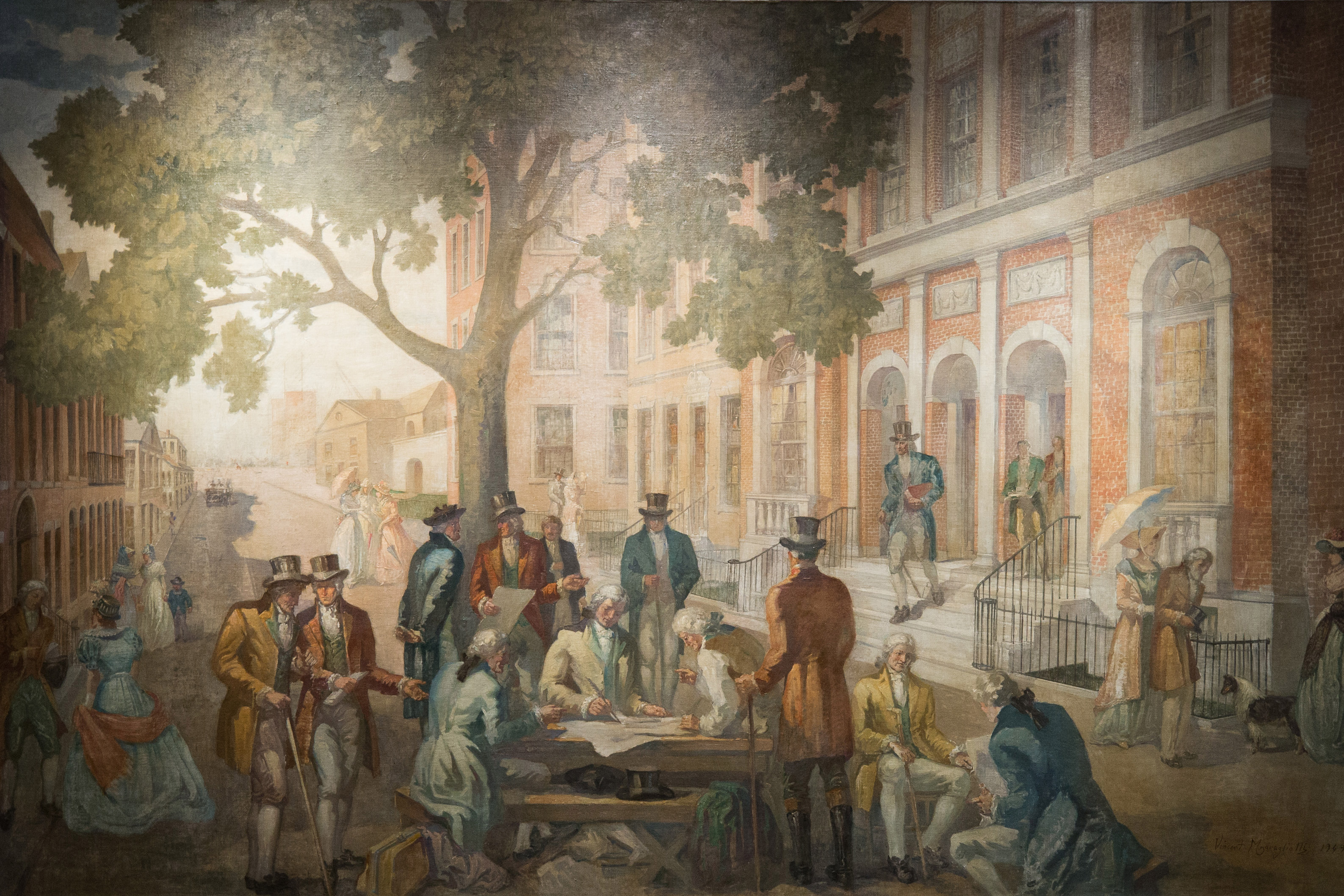 |
New York Stock Exchange at 225: Buttonwood Agreement History | TIME |
Oh, how I love starting with the origins—it's like the opening chapter of an epic novel. The history of the New York Stock Exchange kicks off in 1792, a time when America was still finding its footing after the Revolutionary War. Back then, the young nation was drowning in debt, and Secretary of the Treasury Alexander Hamilton had a bold plan: issue bonds to refinance that debt and stabilize the economy. But trading these securities was chaotic—brokers haggled in coffee houses and on the streets, with no rules to prevent scams or insider deals.
Enter the Buttonwood Agreement. On May 17, 1792, 24 stockbrokers gathered under a buttonwood tree at 68 Wall Street to sign a pact that would change everything. They agreed to trade securities only among themselves, set a fixed commission rate of 0.25%, and prioritize each other in deals. This wasn't just paperwork; it was a response to the first financial panic in U.S. history, triggered by speculative banking schemes. I imagine the scene: men in tricorn hats, quill pens in hand, shaking on a deal that fostered trust in a wild market.
Why is this so fascinating? This humble agreement laid the foundation for organized trading, evolving into the NYSE we know today. Without it, the evolution of the New York Stock Exchange might have taken a different path. Think about it—those early trades included $80 million in government bonds to pay off war debts, setting the stage for public investment. It's a reminder that big institutions often start small, with a group of people solving real problems.
Let me share a quick story: One of the signers, Leonard Bleeker, was a prominent broker whose firm helped finance the Erie Canal later on. Stories like his show how the NYSE's roots intertwined with America's growth. For stock market history for beginners, this fact highlights how trading shifted from informal barters to a structured system, boosting economic confidence.
Over the years, this agreement has been mythologized—there's even a plaque marking the spot today, though the original tree is long gone. But its spirit lives on; the NYSE still honors it with a buttonwood tree planted nearby. If you're ever in New York, I recommend visiting Wall Street to feel that history firsthand. It's one of those fascinating facts about Wall Street that makes you appreciate how far we've come from tree-side deals to digital trading floors.
To break it down simply:
- Key Players: 24 brokers, including names like Samuel Beebe and Benjamin Seixas.
- Immediate Impact: Standardized commissions reduced fraud and encouraged more trading.
- Long-Term Legacy: Paved the way for the NYSE's formal establishment, influencing global markets.
As I reflect on this, it strikes me how this moment mirrors modern startups—innovators banding together against uncertainty. The when was the NYSE founded question often points to 1792, even though official incorporation came later. It's a cornerstone of important milestones in NYSE history, and understanding it helps demystify the stock market for newcomers.
Fact 2: From Informal Gatherings to Official Status – The 1817 Constitution That Shaped Modern Trading
Building on that buttonwood magic, let's fast-forward to 1817, a pivotal year in the history of the New York Stock Exchange. By then, trading had grown chaotic again, with brokers competing fiercely in New York's coffee houses like the Tontine Coffee House. I can picture the smoky rooms filled with shouts and scribbled notes—exciting, but inefficient and prone to disputes.
That's when the brokers decided to formalize things. On March 8, 1817, they adopted a constitution, renaming themselves the New York Stock & Exchange Board. This document set strict rules: trading sessions twice a day, fines for misconduct (like $0.25 for disorderly behavior), and exclusive membership via "seats" that cost $25 initially. It was inspired by Philadelphia's exchange, but New York's version emphasized governance and transparency.
What makes this fact so intriguing for stock market history for beginners? It marked the shift from curbside trading to an organized institution. The board rented a room at 40 Wall Street for $200 a year, listing about 30 securities, including banks and insurance companies. This structure attracted more investors, as it promised fairness.
Here's a personal anecdote: I once read about Anthony Stockholm, the first president, who enforced rules strictly to build credibility. His leadership helped the exchange survive early panics, like the one in 1819. It's stories like these that humanize the evolution of the New York Stock Exchange—real people making decisions that echo today.
In terms of impact:
- Membership Growth: Seats became valuable, selling for up to $400 by 1827.
- Trading Innovations: Introduced call markets, where stocks were announced one by one.
- Economic Role: Helped fund infrastructure like canals and railroads, fueling America's expansion.
This milestone is one of those interesting stock market facts because it shows how regulation breeds growth. Without the 1817 constitution, the NYSE might not have become the world's largest exchange by market cap. If you're exploring fascinating facts about Wall Street, remember this as the moment when coffee house chatter turned into a powerhouse.
I find it inspiring how this setup influenced modern exchanges worldwide. It's a lesson in organization: even in finance, structure wins over chaos.
Fact 3: The Revolutionary Stock Ticker – How 1867 Changed Market Communication Forever
Ah, the stock ticker—it's like the heartbeat of Wall Street, and its invention in 1867 is a game-changer in the history of the New York Stock Exchange. Before this, market info traveled slowly via messengers or telegraphs, leaving investors in the dark. Imagine waiting hours for price updates; it was frustrating and unfair.
Enter Edward A. Calahan, who invented the first stock ticker, a machine that printed stock prices on ticker tape via telegraph lines. Installed at the NYSE, it transmitted data instantly across the U.S., democratizing access. Thomas Edison improved it in 1869, making it faster and more reliable.
Why does this thrill me? It's one of the important milestones in NYSE history that bridged Wall Street and Main Street. Suddenly, brokers in Chicago or Boston could react in real-time, boosting trading volume. By 1886, the NYSE saw its first million-share day, partly thanks to this tech.
Let me tell you a story: During the Gold Corner of 1869, the ticker helped spread news of Jay Gould's scheme, preventing worse chaos. It's interesting stock market facts like this that show technology's role in stability.
Breakdown:
- How It Worked: Printed symbols and prices on paper tape, ticking as it went—hence the name.
- Impact on Trading: Reduced information asymmetry, making markets fairer.
- Cultural Legacy: Ticker tape parades started here, with paper thrown from windows.
For stock market history for beginners, this fact explains why real-time data is crucial today. The evolution of the New York Stock Exchange owes much to such innovations, paving the way for electronic trading.
I often think about how this ticker foreshadowed our digital age— from tape to apps, it's all about speed and access.
Fact 4: The Iconic Building's Grand Debut – 1903's Architectural Marvel on Wall Street
If walls could talk, the NYSE building at 11 Wall Street would have endless stories. Opened in 1903, this Beaux-Arts masterpiece by George B. Post cost $4 million and symbolized the exchange's rising power. With its massive columns and 78-foot ceilings, it's a sight to behold.
The move from cramped quarters was necessary as trading boomed post-Civil War. The new building featured air conditioning (a first!), telephones, and trading posts for efficient dealings. I envision the opening day: brokers in suits, marveling at the gilded ceiling and marble floors.
This fact is key in fascinating facts about Wall Street because the building became synonymous with finance. It survived bombings and crashes, standing as a beacon of resilience.
Story time: In 1903, engineer Alfred Wolff installed ammonia-based cooling, equivalent to 150 tons of ice daily—innovative for its time!
Highlights:
- Design Features: Six Corinthian columns, pediment sculpture by John Quincy Adams Ward depicting "Integrity Protecting the Works of Man."
- Expansion: Added 11 Wall Street annex in 1922 for more space.
- Modern Use: Now a landmark, hosting bell ringings and events.
For those asking when was the NYSE founded, this 1903 milestone marks its physical evolution. It's a reminder that the history of the New York Stock Exchange is as much about places as people.
I get emotional thinking about how this building has witnessed history— from booms to busts, it's the heart of Wall Street.
Fact 5: The Terrifying Wall Street Bombing – Survival and Strength in 1920
The year 1920 brought terror to Wall Street with a bombing that tested the NYSE's mettle. On September 16, a horse-drawn wagon exploded outside the building, killing 38 and injuring hundreds. Suspected anarchists left the scene scarred, with pockmarks still visible today.
Why include this in top 10 facts? It shows the exchange's resilience—trading resumed the next day, symbolizing defiance. I can only imagine the chaos: shattered glass, panicked crowds, yet the bell rang on schedule.
Personal reflection: This event echoes modern threats, like 9/11, when the NYSE closed for four days but reopened stronger.
Key details:
- Casualties: Deadliest act of terrorism in the U.S. at the time.
- Investigation: Never solved, but linked to Galleanist anarchists.
- Legacy: Heightened security, influencing today's protocols.
This interesting stock market fact underscores that the evolution of the New York Stock Exchange involves overcoming adversity, making it more than a market—it's a survivor.
Fact 6: Black Tuesday's Catastrophic Crash – The 1929 Event That Reshaped Global Finance
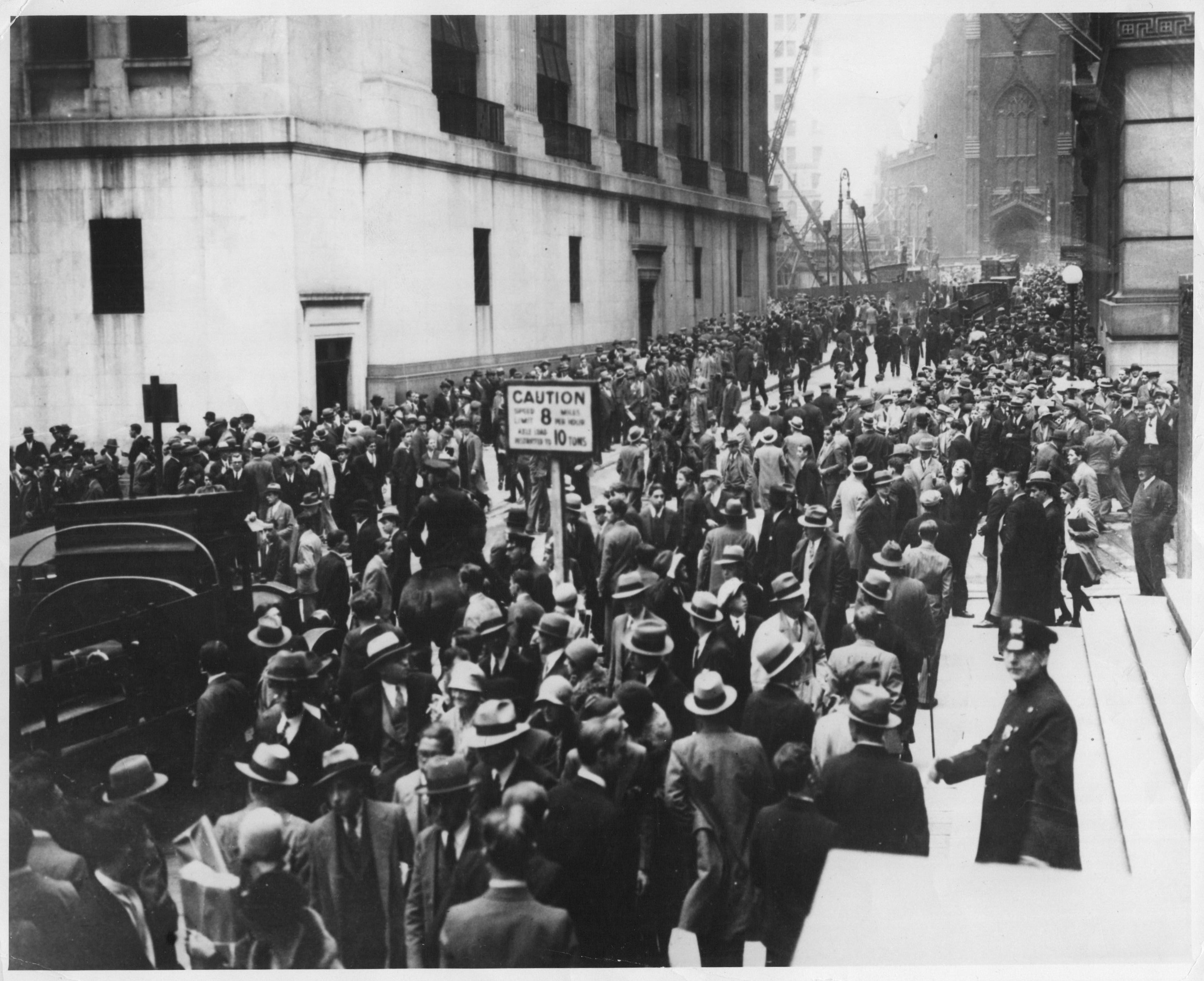
No discussion of important milestones in NYSE history is complete without the 1929 crash. On October 29, Black Tuesday, the market plummeted, with 16 million shares traded and billions lost. It ended the Roaring Twenties bull market, sparking the Great Depression.
I feel a chill recounting this: Speculative buying on margin fueled a bubble that burst, leading to bank runs and unemployment. Crowds gathered outside the NYSE, desperate for news.
Story: Winston Churchill, visiting Wall Street, witnessed a broker's suicide leap—though myth, it captures the despair.
Impacts:
- Economic Fallout: DJIA dropped 89% from peak to trough.
- Reforms: Led to the SEC in 1934 for better regulation.
- Lessons Learned: Emphasized diversification and oversight.
For stock market history for beginners, this fact warns against greed, a timeless fascinating fact about Wall Street.
Fact 7: Breaking Gender Barriers – Women on the Trading Floor During WWII in 1943
World War II brought change to the NYSE when, in 1943, women were allowed on the trading floor as pages and reporters due to male shortages. This was a quiet revolution in a male-dominated world.
It's touching to think about: Women like those in the "Rosie the Riveter" era stepping into finance, handling quotes and messages.
Why significant? It paved the way for diversity, though full membership came later. During the war, the market encouraged bond buys for victory.
Details:
- Role Expansion: Women worked amid the chaos, proving their capability.
- Broader Context: Part of national mobilization.
- Legacy: Inspired future generations.
This interesting stock market fact shows how crises accelerate progress in the history of the New York Stock Exchange.
Fact 8: Muriel Siebert's Historic Membership – The First Woman to Own a Seat in 1967
In 1967, Muriel Siebert became the first woman to buy a NYSE seat, breaking a 175-year glass ceiling. After rejections, she persisted, paying $445,000.
Her story inspires me: Arriving from Ohio with $500, she built a career, founding her firm.
Impact:
- Diversity Milestone: Opened doors for women in finance.
- Advocacy: Fought for equal facilities, like restrooms.
- Legacy: Honored as "First Lady of Wall Street."
For fascinating facts about Wall Street, this highlights inclusion's role in the evolution of the New York Stock Exchange.
Fact 9: The Shocking Black Monday – 1987's Record Drop and Quick Recovery
On October 19, 1987, the DJIA fell 22.6%, the largest one-day drop ever. Caused by program trading and global tensions, it erased $500 billion.
I remember studying this: Panic selling amplified by computers, but the market rebounded quickly.
Key points:
- Causes: Overvaluation, trade deficits.
- Responses: Circuit breakers introduced.
- Lessons: Showed tech's double-edged sword.
This fact in important milestones in NYSE history reminds us of markets' volatility.
Fact 10: The Digital Era and ICE Merger – From Floors to Servers in the 21st Century

The evolution of the New York Stock Exchange went high-tech in the 2000s. Decimalization in 2001 switched from fractions to decimals, tightening spreads. Then, in 2013, Intercontinental Exchange (ICE) acquired the NYSE for $8.2 billion, blending traditional and electronic trading.
Fascinating: The trading floor, once bustling, now symbolic as algorithms dominate.
Story: Post-9/11 closure in 2001 tested resilience, reopening with a 7% drop but recovering.
Details:
- Tech Shifts: Hybrid Market in 2006 combined floor and electronic.
- Global Reach: ICE merger expanded to derivatives.
- Current State: World's largest by market cap, over $30 trillion.
This caps our top 10 facts, showing adaptation in the history of the New York Stock Exchange.
Wrapping Up This Epic Journey Through NYSE History
As I wrap up this journey into the incredible history of the New York Stock Exchange, I feel grateful for how far we've come. The NYSE isn't just a building on Wall Street—it's a symbol of dreams, struggles, and triumphs. From that buttonwood tree to digital screens, it's witnessed America's story unfold. If these fascinating facts about Wall Street inspired you, share this article with someone who loves history or is just stepping into the world of investing. Together, let's keep learning and growing—maybe even ring that famous bell someday!
10 FAQs About the History of the NYSE
1. When was the NYSE founded?
The NYSE was founded on May 17, 1792, with the signing of the Buttonwood Agreement by 24 stockbrokers under a buttonwood tree on Wall Street.
2. What was the Buttonwood Agreement?
It was a pact signed in 1792 that established rules for trading securities, set commissions, and promoted trust among brokers, marking the start of organized trading.
3. How did the stock ticker change the NYSE?
Introduced in 1867, the stock ticker provided real-time price updates via telegraph, making information accessible nationwide and boosting trading efficiency.
4. When did the NYSE move to its current building?
The iconic building at 11 Wall Street opened in 1903, featuring advanced amenities like air conditioning and designed to handle growing trading volumes.
5. What happened during the 1920 Wall Street bombing?
A bomb exploded outside the NYSE on September 16, 1920, killing 38 people, but trading resumed the next day, showcasing the exchange's resilience.
6. What caused the 1929 stock market crash?
Over-speculation, margin buying, and economic imbalances led to Black Tuesday on October 29, 1929, triggering the Great Depression.
7. When did women first work on the NYSE trading floor?
In 1943, during World War II, women were hired as pages and reporters due to labor shortages.
8. Who was the first female member of the NYSE?
Muriel Siebert became the first woman to own a seat in 1967, after overcoming significant barriers.
9. What was Black Monday in 1987?
On October 19, 1987, the DJIA dropped 22.6%, the largest single-day percentage loss, due to computerized trading and global factors.
10. When was the NYSE acquired by ICE?
In 2013, Intercontinental Exchange acquired the NYSE, marking a shift toward more electronic and global operations.
As I close this incredible journey through the history of the New York Stock Exchange, I can’t help but feel humbled by how much it has shaped not just Wall Street, but the dreams, struggles, and successes of millions of people around the world. The NYSE is more than a marketplace—it’s a living symbol of ambition, resilience, and opportunity. If these stories sparked your curiosity, don’t let them stop here. Share this article with friends who love history or are just stepping into the world of investing, because knowledge grows stronger when it’s shared. Subscribe to my blog for more inspiring insights, and let’s walk together on this path of learning, growth, and discovery. The future of finance begins with understanding the past—and today, you’ve taken that step. Let’s keep moving forward, together.
Disclaimer: This article is for educational and informational purposes only. It is not financial advice. Please consult a licensed financial advisor before making any investment decisions.
History of the New York Stock Exchange, Interesting facts about Wall Street, Evolution of the NYSE over time, Milestones in stock market history, How the NYSE was founded, Fascinating facts about stock exchanges, Wall Street financial history, Growth of the American stock market, Important events in NYSE history, Beginners guide to stock market history, Timeline of the New York Stock Exchange, Wall Street culture and traditions, Influence of NYSE on world economy, NYSE history and global finance, Surprising facts about Wall Street, Stock exchange origins and facts, Impact of NYSE on investors, Historic moments on Wall Street, Famous events in NYSE history, The story of the New York Stock Exchange


No comments:
Post a Comment